
Finding Dickens
It's never too late for the books you should read (but didn't want to)

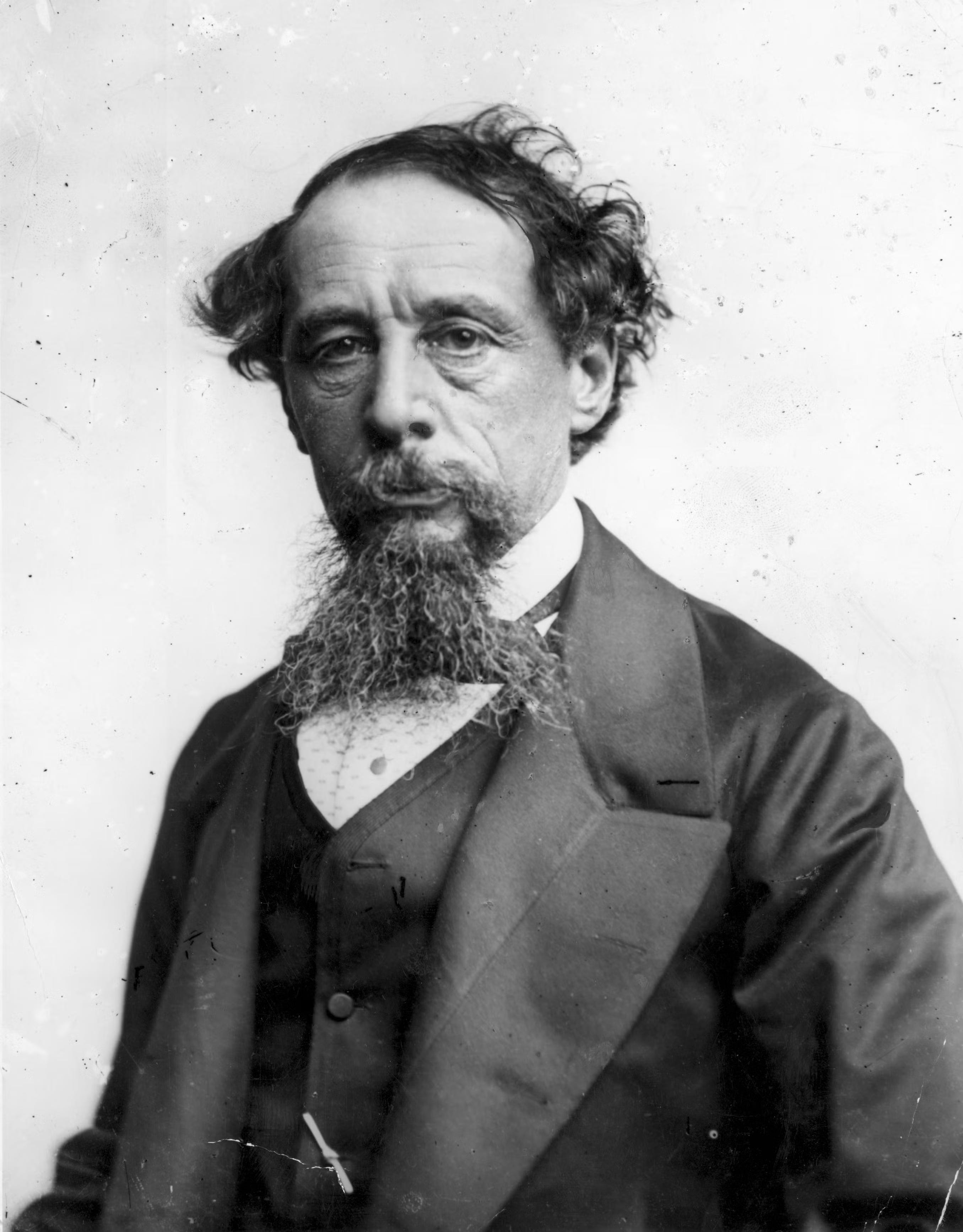
Over the summer of 2020, a friend told me that her 13-year-old daughter planned to start reading the novels of Charles Dickens.
I was impressed and appalled. The former by the young lady´s enterprise, the latter by the fact that despite being a voracious reader and having an A level in English Literature, my guilty literary secret was that I´d never read Dickens.
My not reading Dickens started with him not being on either my O or A level syllabus, and frankly he was never going to find himself high on my extra-curricular reading list, which at that time was comprised largely of DC comics and Stephen King.
In the post-studying age, Dickens was the very epitome of “books you should read”, rather than the ones you wanted to read. Despite this, I found my way to other novelists in this category: Jane Austen, the Brontes, Thackeray, Trollope, even giving a second chance to Thomas Hardy, whose books I had hated at school with a rare passion.
In my late 20s I picked up my obsession with crime novels, started the (now dead) Material Witness blog and read little else for 20 years. The closest I made it to Dickens was in 2003, when a change in job suddenly presented me with a lot of driving and “reading the classics”, or listening to them, seemed a good way to spend all that time on the M1. I went to the library and rented the 28-tape (!) box set of A Tale of Two Cities. I didn´t make it out of the first tape, finding it impossible to cope with both driving and concentrating on Dickens.
My life has not been Dickens free, of course. There were school productions of Oliver Twist; trips to see A Christmas Carol; the BBC has a long track record of brilliant adaptations – Bleak House, Great Expectations and Martin Chuzzlewit stick in the memory. But no books.
Until that summer of 2020 when my friend’s daughter inspired me to try again with audio – having long become accustomed to running, driving, cooking or just idling with an audio book.
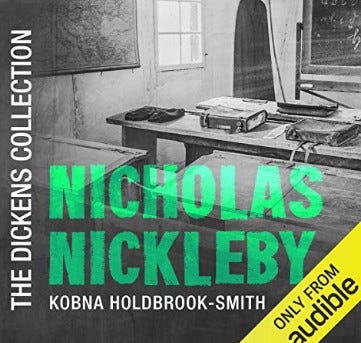
I decided to start with a book I knew nothing about – Nicholas Nickleby performed by Kobna Holdbrook-Smith. There was no looking back: I went on very quickly to Our Mutual Friend, and then cycled quickly through the rest.
And I´m feeling exactly as I did about five years ago, when I reluctantly ate oysters for the first time: that I had been wasting my life not reading Dickens (and not eating oysters).
So what did I find? What had I missed?
The first thing that struck me was the sheer exuberance of the writer. Dickens seemed he was having fun with every line, every paragraph, every word! It´s evident in the names as much as anywhere else: Flintwinch, Stiltingstalk, Barnacles, Nicodemus Boffin, Wackford Squeers, Tupman the lover, Slumkey, McChoakumchild!
And there is rhythm, flourish and poetry on every page – language stretched to very limits of its descriptive prowess. It is by turns joyful, soulful, angry, colourful, empathetic and atmospheric. Halfway through Nicholas Nickleby I watched Armando Iannucci´s The Personal History of David Copperfield a gloriously vivacious and energetic film and kept thinking: Dickens would have loved this. Iannucci has given life not only to his story, but to the very spirit of his story-telling.
And often that story-telling is funny, sometimes darkly so and sometimes with beautiful light-heartedness and generosity. Here it is a play on words, there a wry aside, somewhere else a witty observation – and very often it is laugh-out-loud-funny and never more so than in The Pickwick Papers, less a novel perhaps than a serious of raucous character sketches. Consider the physical humour conjured by the picture of Mr Pickwick and his friends caught between two charging armies during a military display.
“There are very few moments in a man’s existence when he experiences so much ludicrous distress, or meets with so little charitable commiseration, as when he is in pursuit of his own hat.”
You don´t need Armando Iannucci to bring that to life (although Lord knows I´d love him to), it´s right there imprinted in your mind the moment you read the words.
Elsewhere the stories deliver the gut punch of powerful social commentary as Dickens takes aim at the iniquity and cruelty of society and the indifference of the establishment.
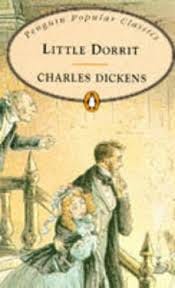
And that brings me to Little Dorrit, the child of the Marshalsea, the debtor´s jail in Borough where Dicken´s own father was imprisoned during his childhood.
Little Dorrit is such a richly textured, multi-layered novel it´s difficult to know where to begin. What struck me most about it was just how modern it felt – and not just because the narrative takes place during a plague. The book takes on both grand themes – the oppression of poverty, the matching claustrophobia and absurdity of wealth and class, the spectacle of society in thrall to capital – and the individual struggle. At times it feels startlingly, painfully intimate – there are many many tears reading Dorrit – while at others it is hugely grand and philosophical with multiple lessons for those of struggling to cope with Britain in the 20202. (The passage in which Dickens describes and takes apart the prevailing attitudes to foreigners felt particularly pertinent).
And I cannot recall another novel with such a wealth of extraordinary and vibrant characters. Of course Little Dorrit, her father, Arthur Clennam and the other main characters. But such care is lavished on peripheral actors – Flora, John Chivery, Doyce – that each momentarily fills the space they occupy in the narrative as if the book were about them, or should be.
My immersion in that world occasionally felt completely overwhelming. It is utterly magnificent from start to finish and I thank my stars (and my friend’s daughter) that better late than never I finally found my way to Dickens.
(This story was originally published on the now defunct Material Witness blog in September 2020).
Beautifully put, Ben! I was lucky enough to start in my many idle moments as a young Barrister, and have read/listened to the lot 3 or 4 times. I crave time enough to have perhaps to more laps. I couldn’t agree more about Iannaucci; at Jack’s request we rewatched Death of Stalin last weekend - tremendous!